
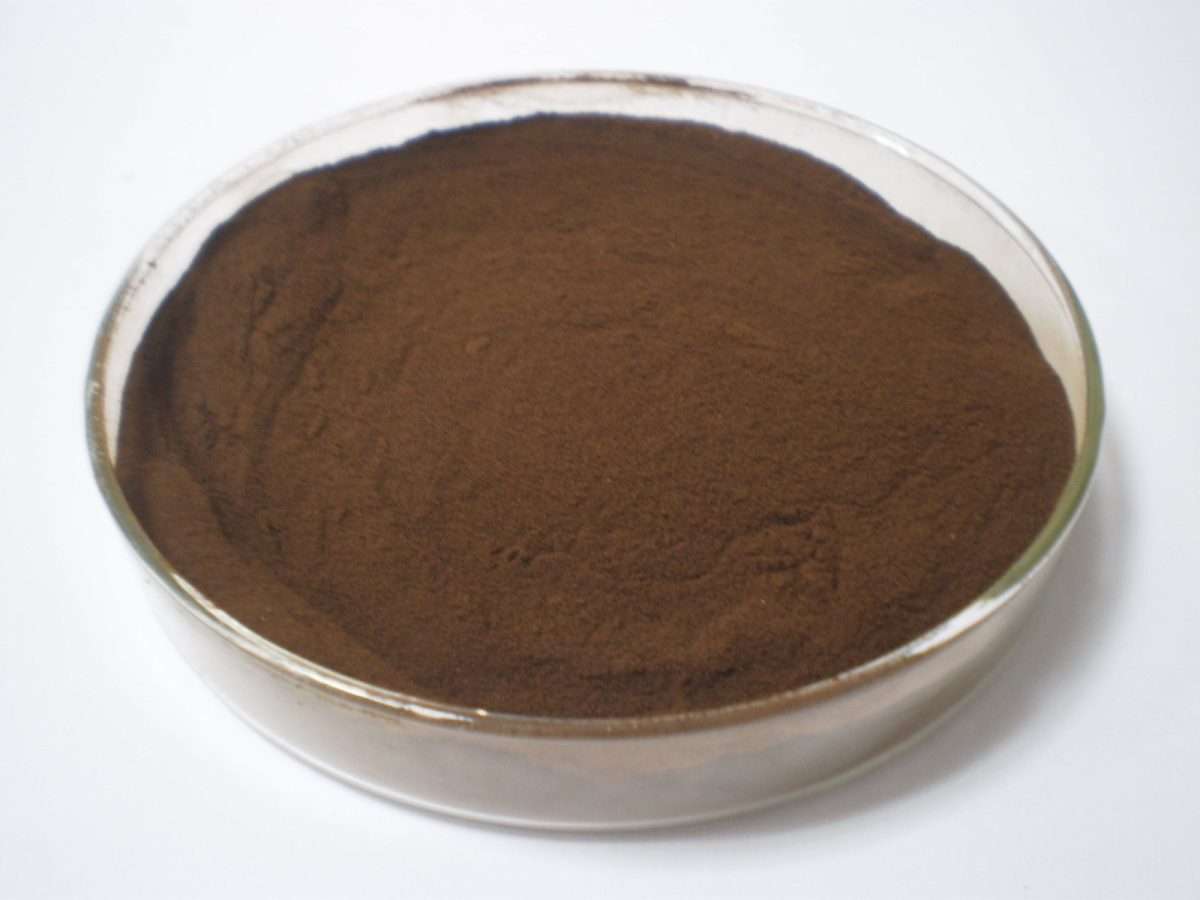
Lignosulfonate Structure and Functional Groups
Lignosulfonate is not a single small molecule with one exact structural formula. It is a heterogeneous family of sulfonated, lignin-derived aromatic polymers with a distribution of molecular sizes and substitution patterns. Simplified drawings are useful for showing functional groups, but they do not represent every molecule in a commercial product.
Lignin-Derived Aromatic Backbone
The structural framework originates from lignin, an irregular, branched biopolymer built from phenylpropane-derived units. During sulfite pulping, lignin fragments are separated from the plant fibre and sulfonate groups are introduced. This modification increases their affinity for water and produces the material commonly supplied as sodium, calcium, magnesium or ammonium lignosulfonate.
Important Functional Groups
| Structural feature | Practical significance |
|---|---|
| Sulfonate groups | Provide negative charge and support water solubility, adsorption and dispersion. |
| Aromatic rings | Form the lignin-derived backbone and contribute to surface interaction and natural color. |
| Phenolic and aliphatic hydroxyl groups | Influence hydrogen bonding, adsorption and chemical reactivity. |
| Methoxy groups | Reflect the original lignin source and affect the chemical character of the polymer. |
| Carboxyl and carbonyl groups | May contribute additional charge, interaction with ions and oxidative behavior. |
| Counterions | Sodium, calcium, magnesium or ammonium balance anionic sites and define the commercial salt form. |
Why There Is No Single Formula or Molecular Weight
Biomass source, pulping severity, sulfonation, purification and fractionation all change the resulting material. A sample therefore contains molecules of different sizes rather than one fixed molecular weight. Reported values depend on the analytical technique, calibration and sample preparation, so figures should only be compared when the measurement methods are compatible.
How Structure Relates to Industrial Function
| Structure-related factor | Property to evaluate |
|---|---|
| Anionic charge and sulfonation | Water compatibility, particle adsorption and dispersion. |
| Molecular-size distribution | Viscosity, steric stabilization, binding and penetration. |
| Hydroxyl and carboxyl content | Surface interaction, ion association and formulation compatibility. |
| Counterion and inorganic content | Solubility, electrolyte balance, ash and application suitability. |
| Residual sugars and low-molecular components | Setting behavior, biological systems, color and storage performance. |
These relationships describe screening directions, not guaranteed performance. The complete commercial grade and the actual formulation must be tested.
Structure Is Not a Purchasing Specification
A structure drawing cannot confirm product purity, grade consistency or fitness for an application. Buyers should review the agreed specification and batch COA for relevant properties such as lignosulfonate content, moisture, pH, reducing sugar, sulfate, ash and water-insoluble matter. TDS and SDS documents provide additional product and safety information.
Related Technical and Product Pages
- Chemical Composition and Commercial Specifications
- Lignosulfonate Production
- Sodium Lignosulfonate
- Calcium Lignosulfonate
- Magnesium Lignosulfonate
Email info@greenagrochem.com with the application, required counterion, test limits, quantity and destination to request the appropriate specification, TDS, SDS, representative COA or sample.
